When you think of promoting your company and your brand, what do you picture? Emails, print ads, brochures and commercials? Maybe signage outside your brick-and-mortar business. The basics, right? These are a few tried and true ways businesses have promoted themselves in the past. However, as the world has changed – especially this year – businesses everywhere are having trouble using these the way they used to. Whether you’re breaking ground on your first business or you’ve been in the game for years, there’s one aspect today’s businesses can’t survive without: Social media. How do you maximize your social media presence?
It’s impossible to ignore. No matter where you go, you’re constantly surrounded by people Tweeting, commenting, sharing, liking… The list goes on and on. And although social media may seem like a trivial detail, it deserves every bit of hype it’s gotten.
Social media’s multigenerational reach is stronger now than ever before. Teens, young adults, parents and even their parents are all connecting and sharing through these virtual coffee shops – For a company desperately seeking exposure with its target audience, this opportunity is unprecedented.
While the amount of information on social media may seem overwhelming to those newcomers out there, you’ve come to the right place. We’ve done all the digging for you and have compiled the top 3 benefits of having a strong social media presence.
1. Customer Reach
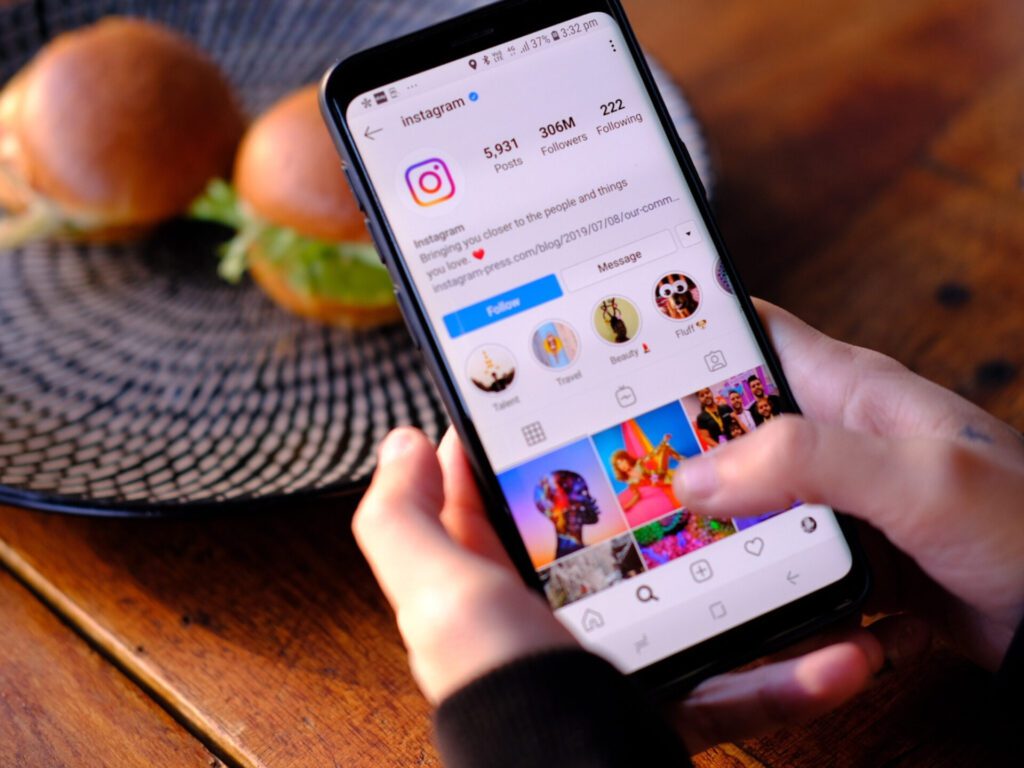
First, let’s start with the numbers. According to this article on Oberlo.com titled, there are about 3.08 billion social media users as of 2020. I repeat, 3.08 billion. For reference, there are around 7 billion people in the world – so that’s nearly half of the entire planet. What does this mean to you as a business owner? Reach. This is undeniably the greatest benefit of social media in relation to companies – particularly for smaller or budding businesses. The sheer number of social media users provides the potential to connect with tens of thousands of new consumers who were previously unreachable. According to Hootsuite.com, 92% of Instagram users say they’ve followed a brand, clicked on their website, or made a purchase after seeing a product/service on the platform. To sweeten the pot, 84% of Instagram users say they’re open to discovering small/local brands, or new brands and products. This is a major win for every startup, mom n’ pop shop, or small-town business. Moral of the story: whether they’re 10 miles or 1,000 miles away, you can quickly and easily reach consumers on a global level through social media. With each post, share, comment and ‘like,’ you’re exposing your company to more and more consumers. The further your reach, the greater your awareness.
2. Decreased Marketing/Advertising Costs.
The second major benefit of having a strong social media presence is the potential to lower your marketing and advertising costs. Traditional avenues can cost your company thousands of dollars and may still ultimately be ineffective. Two perks of advertising through social media: it costs nothing to create an account, and there are proven metrics to monitor your progress. Add in the benefits of social media ads to increase exposure– all at a cost much lower than traditional ads – and you have a winner.
Still not sure? Consider this stat from Business News Daily: 78 percent of people say that companies’ social media posts influence their purchases. That means nearly 4 out of 5 consumers are basing their purchasing decisions on a medium that cost virtually nothing to the company. That means more cash stays with your business and you increase your sales.
3. Improved Customer Service.
Last, but not least – a strong social media presence allows for improved customer service. How, you ask? Picture this – It’s Monday morning and your new coffee-maker has just been delivered. You unpack it, plug it in and realize it won’t brew. You call customer service only to hear you have 45 minutes until the next available representative. So now you’re stuck on hold, angry and uncaffeinated.
Sound familiar? This is where social media gives companies a unique advantage. Increasing lines of communication means more accessible customer service. We are seeing more and more individuals Tweet, direct message, and tag companies to get their attention. If you have a strong social media presence, your accounts can provide the unique opportunity to converse with individual customers in real time. Thus, allowing you to address and resolve customer service concerns as they occur. The quicker you can resolve an issue, the happier your customers will be.
And, it gets even better: You can also score your business some major brownie points if you handle a customer issue properly. When publicly addressing a customer service matter, a quick and sympathetic resolution will show fellow consumers that you value your customers, not just their wallet.
Social media for businesses in a no-brainer these days – are you using it to its full potential? If not, you’re leaving a LOT of business on the table! Book a chat with us to learn more about how your company needs to maximize its social media now!
Politics aside, this country has, in my opinion, suffered a huge loss in the last month – one I, as a female business owner, feel I need to pay tribute to. Ruth Bader Ginsburg, Associate Justice of the Supreme Court of the United States, passed away on September 18, 2020. As though an election year complete with a pandemic and an economic crisis wasn’t rough enough, I feel our country lost a true advocate for gender rights. Whoever replaces her will have some huge shoes to fill.
Notorious RBG, as she has been lovingly come to be called, was a steadfast fighter for equality among genders. I truly believe that had she not paved the way over her 87 years, my life would be drastically different – and Flamingo Consulting LLC would not have been possible. Her influence resonates in everything we try to do as a business:
“Real change, enduring change, happens one step at a time.” -RBG
She believed in strategic change over a complete overhaul. She embraced the idea that change cannot happen overnight. Prior to her role on the bench, Ruth Bader Ginsburg worked with the ACLU and founded the Women’s Rights Project. Here, she focused on making one legal precedent at a time, allowing for major shifts to occur over time.
As a business, we at Flamingo Consulting push for the same thing. We want every move to be in the right direction – one that supports the vision of our clients and one that makes them proud to continue to build and grow. This belief in small changes having a great impact allows a business, a brand, or a country to shift and grow as the world changes.
She fought for women’s rights for EQUALITY with men, which also meant fighting for men’s rights. While it seems a little counterintuitive at first to achieve gender equity by fighting for men’s rights, it was clear RBG knew how necessary this was. She spent her early career fighting for men’s rights as caregivers of family members and the spouses of female service personnel. She did not push for women to surpass men, but to be their partners and their equals.
She continuously discouraged legislatures from treating men and women different under the law – focusing instead on allowing all of us of any gender the ability to choose our own path.
A female entrepreneur was nearly unheard of – especially one who would be coaching and supporting other businesses. Add in the ability to both start and grow a business (a traditionally masculine role) while being a SAHP (Stay At Home Parent – a traditionally feminine role) – and my very existence in the business world would never have been acceptable without her strategic shifts over her career as both an advocate and a judge. How different would your world look – even if YOU were able to start your own business? How different would your support system, your vendors, your marketing look if not for the many boss babes we work and interact with now?
“If you have a caring life partner, you help the other person when that person needs it. I had a life partner who thought my work was as important as his, and I think that made all the difference for me.” – RBG
She believed in partnership in relationships. Ruth Bader Ginsberg and her husband, Martin Ginsberg, shared a 56-year long relationship and partnership. The two worked in tandem, supporting each other throughout their fair share of struggles. Soon after the birth of their first child, Martin was diagnosed with testicular cancer. Ruth not only attended classes for him to take notes, she typed his dictated papers and cared for him and their young daughter, all while attending law school herself. Martin continued to support his wife’s dreams and advocated heavily for her first court appointment. He felt she belonged on the bench and focused on her career path as much as his own.
Throughout their decades together, the two worked together not only for their careers, but to balance the roles at home. Martin lovingly told stories of his wife’s terrible cooking and how he out of self-preservation, had to learn to become a better cook. Ruth, in order to keep the household duties equitable, took over the role of cleaning up.
This overall shift in acceptable behavior led to a generation – my generation – that believed there was room for two partners or spouses to be equals – and for both to be successful. I have consistently been supported by my husband, who views my work as equally important to his. In every regard, he has given me the space and opportunity to grow my business in the time we have – from supporting my decision to leave the corporate world to become a SAHP, encouraging me to create businesses that fuel my passion, supporting me to attend seminars and training, giving me the opportunity to take evening and weekend meetings while he plays the primary parent role, or even being behind the scenes as a supporter and cheerleader. Without the cultural shift brought about by RBG’s (and Martin’s) inspiration, my role would have been simply to be home or to work for someone else – and I’d have been fighting my own entrepreneurial spirit in order to maintain my predetermined role.
“You can disagree without being disagreeable.” -RBG
She didn’t always win, but she made sure she was heard. Especially later in her career on the Supreme Court, she made it a point to not only write her dissenting opinion when needed, but to actually read it from the bench. She did not want an opposing opinion to be lost to the law textbooks but to allow the masses to hear a differing opinion, even if it was not the winning opinion.
By going on the record with her opinion, she could be sure that the masses – the normal folks like me who do not sit down to read legal opinions – could hear both sides when all 9 judges obviously did not agree. It allowed for discussion and changed perceptions. She did not go to the presses to bash those who disagreed. She simply did what she could with her judicial position to be sure she acknowledged that differences existed (check out this great list of her dissensions for examples: Justice Ruth Bader Ginsburg’s top opinions and dissents, from VMI to Voting Rights Act)
I am, by nature, vocal about my opinion when I have one. I certainly do not expect to win every argument or to be the primary leader in every endeavor, but I will certainly voice a dissent. I proudly stand by my opinion, but will go in the direction that is needed, even when my opinion isn’t the winning one. And – in business as well as law – that dissent is necessary for growth.
“Fight for things that you care about, but do it in a way that will lead others to join you.” -RBG
Finally, she advocated for not only improving your life, but to bring others with you. Throughout her career – with the ACLU, on the bench, and even in the public eye – Ruth Bader Ginsburg was an advocate for learning, teaching, and becoming more. She embraced her gifts of understanding and speaking to be the voice for those who couldn’t speak for themselves. She fought tirelessly until her dying day for equity for all of us – no matter gender, skin color, or upbringing. Her impact was seen and understood – and she was honored by being the first woman and first Jewish person ever to lie in state at the US Capitol. Flags were held at half-staff for 30 days. 2500 people attended her vigil the day following her death and mourners around the country hosted vigils at their local courthouses. Thousands poured in from around the country to pay their respects and many more mourned at home.
Her influence allowed others to follow in her footsteps and continue to push the barriers that kept women in inferior roles. Her precedents, opinions, and dissents allowed others to thrive and embrace the roles they were meant to have – whether they were traditional or not.
This particular trait is something I live and breathe every day. I firmly believe there is room for everyone to be successful in business, and I strive to give as many business owners the tools and support to build a stronger, more consistent business. I actively seek out new relationships with emerging or newly-graduated writers and marketers who are looking to grow their skills and résumé in a career path that doesn’t always offer the “first big break.” I donate time to aspiring entrepreneurs who just need a little direction. I support moms who are wanting to rejoin the workforce or find alternatives to a traditional “job” that takes them away from the day-to-day experiences and activities with their small humans. If Flamingo Consulting does nothing else, I want this business to be known for helping businesses and people to grow into what they are driven to be.
Ruth Bader Ginsburg was a pioneer for women like me – women who didn’t want to be solely defined and limited by their gender and their expected role. She paved the way for millions of women to push for equal pay, the right to fight for their country, and the right to choose their own direction in life. As a woman, a female business owner, and a mother of young girls – the loss of this ally is heartbreaking. I can only hope to use these rights she fought so hard for to better the lives of those around me – to support my family, to bring up the next generation of movers and shakers and dissenters, and to live the life that I have chosen and be an example for other strong women to rise.
With the world in lockdown, most small businesses don’t just get to hit the “pause” button. Meetings, consults, and happy hours are moving virtual – and that means you, as a business owner, need to OWN the virtual space as you keep working toward your goals.
So, when it comes down to that meeting, are you feeling a little…hesitant with your virtual meeting skills? Check out our top 7 tips for looking like a Zoom Meeting PRO:
Be aware of your surroundings. I know – you’re stuck at home and your office is in shambles and the kids are screaming for a snack and you have NO IDEA how you’re going to jump on a call in 10 minutes. In these current times, a lot of your colleagues and coworkers are struggling with the same problems. Do what you can to create a clean background. Tucking yourself into a corner is fine – clear just enough clutter to create a non-distracting backdrop. Then – lock your setting in place and don’t move that tablet or computer until you’re done. No wobbling cameras = no unintentional personal effect showing up. PRO-TIP: Yes – there are backdrop settings. You can use a photo, a beach backdrop, etc. If you can – avoid using it for business meetings. Zoom is wonderful, but not perfect and as you naturally move, it doesn’t keep up. Your shirt changing to your backdrop or a bright, unrealistic backdrop can do just as much to distract your group as a chaotic background.
Embrace what you can’t change. Look – kids, pets, significant others – we’re all trapped in the same space. And chances are, something will pop in at JUST the moment you need it not to. Embrace it. Explain that the kids are kids and they may pop in. Apologize – and move on. Also – see point number 1 (in case you skipped that one!)
Enable the beauty filter! No need for make-up (unless you want it) and it helps smooth the appearance. Total confidence boost for you – and a cleaner look for a positive impression for the group. Check out this feature on our Facebook page. And while you’re there – be sure to follow the page for more tips and updates.
Mute yourself and check your image BEFORE you officially join the meeting. You can set up Zoom to allow you a preview of what your meeting will see, so you can make any adjustments to Steps 1 and 2. If you’re wearing lipstick – this is your chance to make sure there’s none in your teeth.
MUTE yourself when others have the floor. This is ESPECIALLY true for larger meetings. Having too many people speaking can be disastrous – Zoom can’t figure out who to highlight, no one can hear the important piece that needs to be heard, and it’s just overall not a good time. Unless it’s a happy hour – then, all bets are off. PRO TIP: You can mute and un-mute yourself with the space bar (when the chat function is closed). This makes it so easy to pop in, say something quick, then stay on mute to avoid too many people speaking.
Find a way to show appreciation or applause while on mute. In a world where we seek reaction and audience participation, Zoom and mute buttons can make it feel like we’re working in a vacuum. My personal favorite – the ASL sign for applause! It’s so visual and eye catching, your speaker can see your response without interrupting the presentation. You can also use a thumbs-up, a wave, a clapping of hands while on mute – whatever works for you!
Confidence is key. Look like you know what you’re doing, embrace it when something goes weird, and you’ll get the hang of this new virtual world in no time!
That’s it – so easy, right? Now that you’ve read our 7 tips for looking like a Zoom Meeting PRO:you’re ready to talk on virtual meetings – but do you know what you need to say? If your brand could use some help – Flamingo Consulting LLC is here to help bring your big, beautiful brand forward! Schedule your Free discovery session with us today!
The statistics are staggering – 60% of online adults have an Instagram account (that’s Instragram for those not up on their social media vocab). And nearly ⅔ of Americans use IG on the daily. While not necessarily the ideal playground for every business, it’s easy to see what would make playing on #’s and IGTV so inviting.
The downside with so much traffic? It’s easy to get lost in the social media world, when everyone is SHOUTING for your audience’s attention. It’s estimated that by the end of the year 2020, ¾ of US businesses will be on IG. And 2 MILLION businesses are monthly advertisers, meaning you’re fighting a bit of an uphill battle to be seen. But with such a big pie, even a small slice can be more than enough to make any entrepreneur jumping for joy with the flood of new connections, followers, and clients.
The trick for any business on IG is maximizing your effort. If you’re going to hustle on IG, here are the best 8 ways to up your Instagram game.
Have a business page – and create an inviting bio. SO important. It should be short and sweet, but eye-catching. Tell more of your story by using emojis. It should give a glimpse of who your business is, what it does, and what it stands for. Need an example? Wendy’s bio: “📸🍔 🔥” That’s it. Short, sweet, no confusion. Apple’s bio: “Everyone has a story to tell. Tag #ShotoniPhone to take part.”
Mix up your content. Post different types of content – shares, new images, branded images. Show pics of your different products. Use different camera angles and filters. Test out each new IG beta they let you. But beware going off-brand. If you are a serious brand – stay serious. Silly brands – don’t take yourself too seriously.
PICTURE IS KING. You can write all you want for a caption but IG is set up for easy speed-scrolling. You need a quick image that SCREAMS your brand AND is interesting to make them stop scrolling. Without seeing who is posting the image, they should know it’s you because it feels like you. Original content is the ideal – IG users don’t want to see the same post shared 8 times. They want to see you. Using similar graphics, including your logo on your images as a watermark, keeping within a certain color scheme – all of these will help keep your images feeling like you, but with changing content.
ABCTA: Always be Calling To Action. Beautiful images are great, but your followers need to know what to DO ABOUT IT. A call to action should be included with EVERY. SINGLE. POST. Call now. Click here. Download here. Join today. Click for more details. Follow us. Schedule your appointment. Take our…all of these are great CTAs. Catching your followers’ eye won’t get you anywhere if they don’t know how to engage with you!
Use those #s and geotags! Geotags are especially good for brick-and-mortar businesses! Highlight where you are, where you’re headed, and even tag who you’re seeing to gain additional attention from browsers. When it comes to hashtags (#), look for ones that have thousands of uses or up to the low-millions…massive numbers of other similar hashtags may get you buried, but you also don’t want too few or it’s not a valuable use of your # limit. Also, consider creating your own # for people to use when they post about you or your products.
IG Stories are the stories for you! Not sure if your content is the best, but want to test it out? Want to offer a short-term giveaway (you know – like for only 24 hours…hint, hint). Use IG Stories! These images last only 24 hours for your followers to see. These can even be short videos, so be sure you have SOUND to enhance the experience for your followers!
Build your calendar. That’s right – you can BUILD your content ahead of time and have it plan to roll out exactly when you want it to. This allows you to not have to be active to post it at every second of every day (or however often you prefer to post). Creator Studio – the free app within Facebook business pages – allows you to sync up your Facebook page and IG page – and even cross-post the content to both places. You can also use paid services like Hootsuite and Gain to help you visualize the posts you schedule. Pro tip: respond to everyone who comments – even if it’s just as a thank you! This will make your followers feel appreciated and more likely to like you and/or your brand, and want to work with you.
If all else fails, bring in a professional. Most business owners didn’t start a business because they LOVE social media (present company excluded, of course!). For a lot of entrepreneurs, social media is boring – or worse, intimidating and overwhelming. If you’re one of those entrepreneurs, consider either hiring someone to help you figure out a system that will work for you to create content and build your social reach OR even to do it for you. There’s nothing worse than spending time on something related to your business that you HATE. And taking this one task off your plate can give you more time to do what you love, like serving your clients!
That’s it! 8 steps to up your IG game. If you’re loving the idea of #8 – reach out for a with Flamingo Consulting LLC for a FREE Discovery Session!
In case you haven’t been paying attention the last few weeks, there’s a bit of a global crisis going on. Cities, states…entire countries are limiting physical interactions like no living generation has ever seen. For businesses – especially brick-and-mortar businesses – social distancing requirements have changed the way we interact with our customers, clients, and local businesses. And what does a small business do when, in some cases, you literally CANNOT do business? You take to the virtual, digital world. Usage of social media outlets like Facebook, Instagram, and WhatsApp has increased like never before. All previous best-practices and trends are out the window as we learn to handle social media in a pandemic.
So, in a world where every business is SHOUTING for attention on social media, how does a small business really stand out? Or worse – how does a small business stay ALIVE in a new digital age, especially when they haven’t harnessed the power of social media before?
Check out our 7 steps to keep rolling with your social media in a pandemic (or get started!):
Stay Consistent. Growth in a digital world takes time – even with paid ads. Consistent posting – and consistent interactions with followers – will go a long way in terms of organic growth. Creating a posting plan of 2-3 times a week is a great way to start – not overloading your followers with content, but still engaging them on multiple levels.
Remain your true authentic self. I know, I know – “authentic” is the new buzzword. But it’s never been more true than today. If your brand is funny, be funny. Serious – be serious. Stay true to your brand voice. Creating original, true-to-you content is all the rage. Your followers have come to expect something from you – something that feels like your brand. If you have a serious brand that all of a sudden is posting constant memes with Netflix’s The Tiger King references, your followers won’t know quite who they’re dealing with anymore. Your brand matters – and should be consistent, no matter what the world is doing.
Original content is key. Sharing posts has a place in social media – absolutely. But about the 8th time you’ve seen the same post or question or meme, you start to ignore it. Or worse – be annoyed by it. Branded images and unique content can set you apart from all the other noise your followers are being inundated with on social media.
Embrace the Change. Accept it. Talk about it. Talk about what your business is doing. Talk about what changes have taken place. And TELL YOUR CUSTOMERS HOW THEY CAN CONTINUE TO DO BUSINESS WITH YOU. Have gift cards? Facebook can help you sell them. Offering curb-side delivery or porch-pickups? Tell the world. Talk about new products you’re developing. Talk about your plans for the coming year. Talk about how you’re helping your community. This time is scary and dark for many – but talking about it can be the key to a customer staying loyal and believing you’ll be here after the world starts spinning again.
Find new leads and build your email marketing lists. Whether you’re doing this through Facebook lead ads, building a viral blog, or gathering referrals and reviews from your existing clients, this is a time you can focus on your reputation – and gather connections you’ll want post-quarantine.
Try Videos. Yes, this is typically something I recommend outside of a pandemic situation. However, now more than ever, video matters. Your followers and potential followers are struggling with boredom (at best) and anxiety (at worst). Being a gentle distraction is welcome to many – and I mean MANY. Verizon recently reported a 20% week-over-week increase in web traffic. That means you have more people spending more time on the web than ever before. They’re spending longer periods of time surfing and scrolling, outside of their normal usage hours – there’s really no bad time to post. And attention-grabbing videos can mean those potential customers spending more time interacting with your brand than posting just words or a simple image.
Get help if you need it. Social media professionals are still at work – even if it’s in yoga pants from our home offices. Getting some coaching – or even having a professional handle your social media for the time being – may be just what your business needs to stay afloat during this pandemic. As always, you can reach out to Flamingo Consulting – whether you need a quick coaching session or you need help carrying the social media load. We’re here to help!
Want to learn more? Check out our FREE Discovery Sessions – we’d love to chat about how YOU can grow during this crazy time!




Recent Comments